
Stopping for a Carnegie Librarie
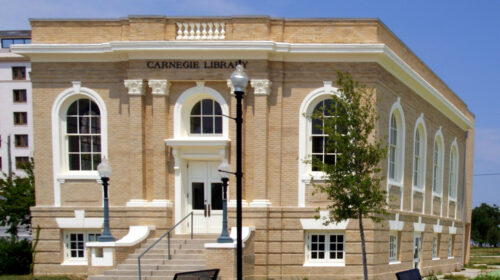
Have you ever gotten off the interstate in a small town to take a look at one of the Carnegie libraries?
May sound crazy, but I have. I’ve been a library junkie since I was a kid. Maybe that’s why I’m drawn to the idea of building a library of legal practitioners’ insight and commentary, one that keeps growing, starting with what is likely over two million pieces of practitioner content our profession has produced over the last twenty plus years.
So I was intrigued by a story by James Barron in The New York Times last fall about Carnegie libraries receiving $10,000 checks.
Barron reported nearly 1,500 libraries got a call from the Carnegie Corporation of New York asking for their address. Many thought it was a joke.
It wasn’t.
Those libraries had been built more than a century ago by Andrew Carnegie. The Corporation he created decided it was time to reconnect and support them again.
Dame Louise Richardson, the Corporation’s current president, felt this was a moment to get back in touch and promote what libraries do. She said, “Libraries are intrinsically democratic institutions,” before quoting Carnegie himself, who called libraries “cradles of democracy” that “strengthen the democratic idea.”
“This was part of the appeal to Carnegie,” she said. “Whether you’re a president or a pauper, when you walk into a library, you have access to the same information.”
With digital publishing, enhanced by AI, and with AI gathering, organizing, and making a library accessible and relevant to lawyers through legal research platforms and the web, a legal library of practitioner publishing ought to be doable.
We’re working on it, but I’m no Carnegie.